
Overview
Fenbendazole is a widely used benzimidazole anthelmintic (anti-parasitic drug) commonly used in veterinary medicine. In this study, researchers from Yale University investigated whether fenbendazole could have antitumor activity due to its known ability to disrupt microtubule formation — a mechanism shared with several established chemotherapy agents.
Why fenbendazole was considered for cancer research
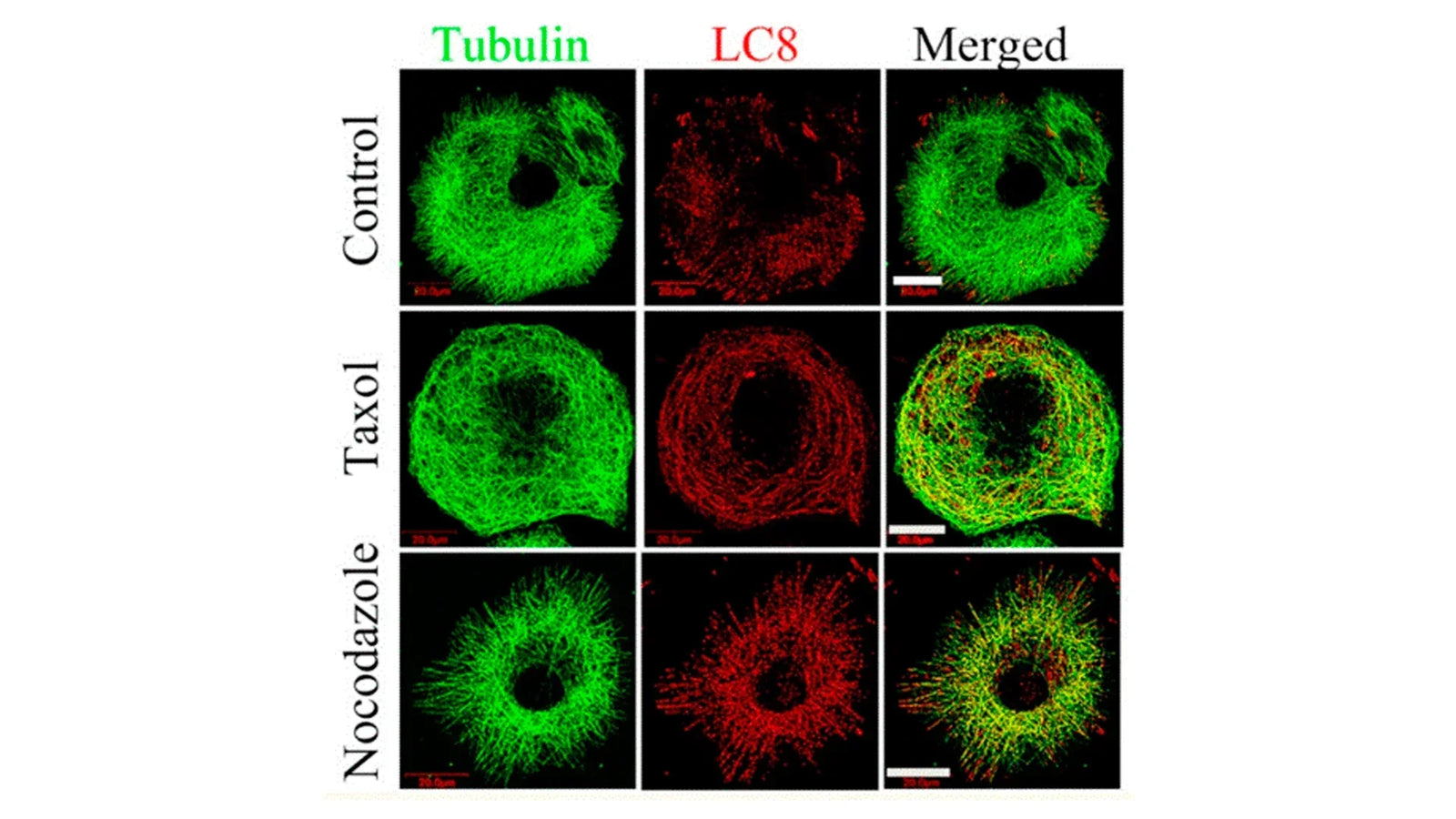
Fenbendazole binds to β-tubulin and disrupts microtubule polymerization, a process essential for cell division. Many anticancer drugs exploit this same vulnerability in rapidly dividing tumor cells.
Because of this mechanism, researchers hypothesized that fenbendazole might selectively impair cancer cell proliferation. It was also considered whether it could affect tumor microenvironments, particularly hypoxic regions that are typically resistant to therapy.
Experimental design
1. In vitro studies (EMT6 mouse mammary tumor cells)
Researchers tested fenbendazole on cultured tumor cells under:
- normal oxygen conditions (aerobic)
- severe hypoxia (<1 ppm oxygen)
- different exposure times (2 h vs 24 h)
- varying drug concentrations
They measured:
- cell viability (clonogenic survival assay)
- growth inhibition
- interactions with radiation and docetaxel
2. Radiation interaction studies
Cells were exposed to:
- X-ray radiation
- fenbendazole (10 μM)
- combination of both
Goal: test whether fenbendazole acts as a radiosensitizer
3. In vivo mouse tumor model
EMT6 tumors were implanted in BALB/c mice.
Treatment groups included:
- control
- fenbendazole alone (i.p. injections)
- radiation alone (10 Gy)
- combination therapy
Tumor growth and metastasis were monitored.
Key findings
Effects on cancer cells (in vitro)
Fenbendazole showed only weak-to-moderate toxicity in cancer cells, becoming more effective only at high doses and prolonged exposure. The effect was slightly stronger under hypoxia but remained limited overall.
This suggests some biological activity, but not strong enough for standalone anticancer use.
Radiation response
No enhancement of radiation-induced cell death was observed. Fenbendazole did not act as a radiosensitizer or improve radiation efficacy.
Animal tumor models (in vivo)
In mice, fenbendazole did not reduce tumor growth or metastasis, either alone or combined with radiation.
This highlights a clear gap between in vitro activity and real biological outcomes in living organisms.
Drug interaction with docetaxel
Only additive (not synergistic) effects were seen when combined with docetaxel, with no meaningful therapeutic enhancement.
Despite similar targets (microtubules), the combination did not improve anticancer efficacy.
Final conclusion
Fenbendazole shows some anticancer activity in lab cell studies but does not demonstrate meaningful tumor suppression in animal models.
Although it has an interesting microtubule-disrupting mechanism, it does not translate into a viable cancer treatment in this study.
The authors note that other benzimidazole compounds may still be worth studying, but fenbendazole itself is not a practical anticancer agent in its current form.


